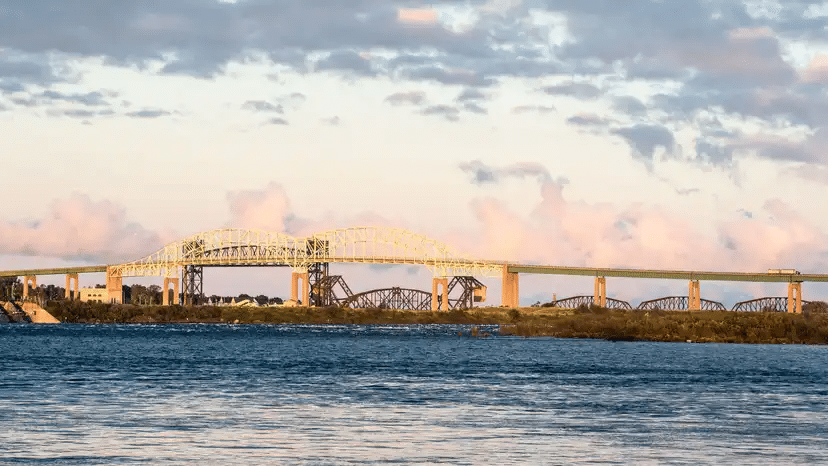
Sault Ste. Marie has spent the last year absorbing the shocks of U.S. trade instability. It may now be home to one of the best answers to it.
The city’s economy has long been tied to cross-border manufacturing. Every tariff threat and border disruption has reverberated through the local economy.
For decades, community leaders have envisioned a modern commercial port connecting Northern Ontario’s resources and industries to domestic and international markets. Today the proposed Port of Sault Ste. Marie creates the chance to move from vision to reality. A rare convergence of factors has created an opportunity whose time has come.
Algoma Steel’s transition to electric arc steelmaking has freed up surplus brownfield land suited for port development. Demand is growing for stronger supply chains serving mining, critical minerals, forestry, steel, and manufacturing.
“The port would help make Canada its own best customer by creating new links between Northern Ontario producers and Southern Ontario manufacturers and consumer markets. It would also give Canadian producers new pathways to overseas customers”
Most importantly, this is a project that can move quickly. With HOPA Ports, Ontario’s largest port operator at the helm, a new port could be operational by 2031, creating a critical gateway in an underserved section of the Great Lakes. Connected to multiple rail networks, the port would help make Canada its own best customer by creating new links between Northern Ontario producers and Southern Ontario manufacturers and consumer markets. It would also give Canadian producers new pathways to overseas customers through the Great Lakes-St. Lawrence Seaway, broadening export opportunities.
Independent economic impact studies indicate the Port of Sault Ste. Marie would handle 2.4 million metric tonnes of cargo annually, generate $900 million in annual GDP, and support 4,000 direct and indirect jobs.
Beyond Sault Ste. Marie, stronger marine transportation connections would support mines, mills, manufacturers, and forestry operations across Northern Ontario. More cargo moving by water means fewer trucks on highways, easing congestion, reducing emissions, and improving safety in communities that see heavy commercial traffic every day.
At a time when Canada is searching for projects that improve productivity, strengthen supply chains, create jobs, and open new markets, this proposal stands out. It repurposes industrial land, supports strategic Canadian industries, and it can be delivered on a timeline that matters.
Trade instability exposed Canada’s vulnerability. The Port of Sault Ste. Marie offers a chance to build lasting economic resilience.
Find out more : https://portssm.ca/